Who Is Responsible for a Tree on the Property Line in NJ?
Ownership follows the trunk, not the branches. Here’s what you can and can’t do with a neighbor’s overhanging tree.
Read More
The honest answer is that it depends entirely on where you live. Here’s how the system works, what usually triggers a permit, and how to check for your address.
This is the question that stops most tree removals before they start, and the honest answer is that it depends entirely on where you live. There’s no single statewide rule that says yes or no. A tree removal permit in New Jersey is a municipal matter, which means the answer in one town can be completely different from the answer two miles away. That’s frustrating, but it’s also manageable once you know how the system is structured. Most of the time a homeowner taking down one dead tree in their own back yard isn’t going to run into a problem. The situations that do create problems are predictable, and they’re worth knowing about before you schedule anything. What follows is how the rules generally work, what tends to trigger a permit requirement, and how to get a definite answer for your specific address in about one phone call.
Tree removal in New Jersey is regulated primarily at the municipal level, through local ordinances that each town writes for itself. In recent years state policy has pushed municipalities toward adopting tree removal and replacement ordinances tied to stormwater management, which means more towns have formal rules now than did a decade ago.
What that adds up to in practice is that your borough, township or city sets the requirements, and those requirements vary widely. Some towns regulate only trees above a certain diameter. Some regulate only street trees or trees in designated zones. Some require replacement planting rather than a permit fee. And some have effectively no rule for a homeowner removing a tree on their own property.
“A tree removal permit in New Jersey is a municipal matter, which means the answer in one town can be completely different from the answer two miles away.
Certain situations come up repeatedly. Large diameter trees are the most common trigger, with many ordinances setting a threshold measured at breast height above which a permit is needed. Street trees, meaning trees in the right of way between the sidewalk and the curb, are frequently under municipal control regardless of who mows around them.
Trees in wetlands, riparian buffers or other environmentally regulated areas can fall under state oversight in addition to local rules, and parts of New Jersey sit inside regional planning areas with their own additional layers. Removals connected to construction or lot development are almost always regulated more tightly than a single homeowner removal. And dead or hazardous trees often have a simplified process, though that usually still means notifying somebody rather than skipping the step.
The fastest route is a direct call to the municipal building, asking for the clerk, the zoning office or the shade tree commission if the town has one. Ask two specific questions: whether a permit is required to remove a tree on private property, and whether there’s a diameter threshold. That call usually takes five minutes and gives you a definite answer for your address.
Many municipalities also publish their ordinance online, though the code can be dense and the tree provisions are often buried in an environmental or zoning chapter. If the tree is dead or clearly hazardous, say so on the call, because that frequently changes which process applies. Whatever the town tells you, a tree removal company should be willing to work within it rather than around it. The same applies to pruning work on protected trees.
Removing a regulated tree without the required approval is a municipal violation, and the penalties are typically financial. Some ordinances also require replacement planting, sometimes at a ratio of several trees for the one removed, which can cost considerably more than the original permit would have.
The practical risk goes beyond the fine. Unpermitted removals surface during property sales and permit applications for other work, and resolving them after the fact is more expensive and slower than doing it in order. None of this is a reason for panic over one dead maple in a back yard. It’s a reason to make the phone call first, because the call is free and the alternative sometimes isn’t. If the tree happens to sit on the boundary, that’s a separate conversation covered in property line trees.
What homeowners ask most before scheduling a tree removal in a New Jersey town they’re unsure about.
Often the process is simpler for dead or hazardous trees, but simpler isn’t the same as nothing. Many towns still want notification or an inspection. Ask specifically about dead trees when you call.
It can. Some ordinances cover the whole property, not just the front. Diameter thresholds are more common than location limits, so the size of the tree often matters more than where it stands.
It varies by town and by company. Ask when you get the estimate so nobody assumes the other one handled it. Either way the homeowner is generally the responsible party.
That’s usually a street tree and usually under municipal control, even though you maintain the grass around it. Don’t schedule that one without checking first.
Rarely for your own tree, though heavy pruning on protected or street trees can be regulated in some towns. Routine pruning on private property is generally not an issue.
We can tell you what tends to apply and what to ask, but the definitive answer comes from your municipality. We work around whatever they require rather than guessing at it.
More on tree work in New Jersey from the Alfa Tree Service blog.
 Legal
Legal
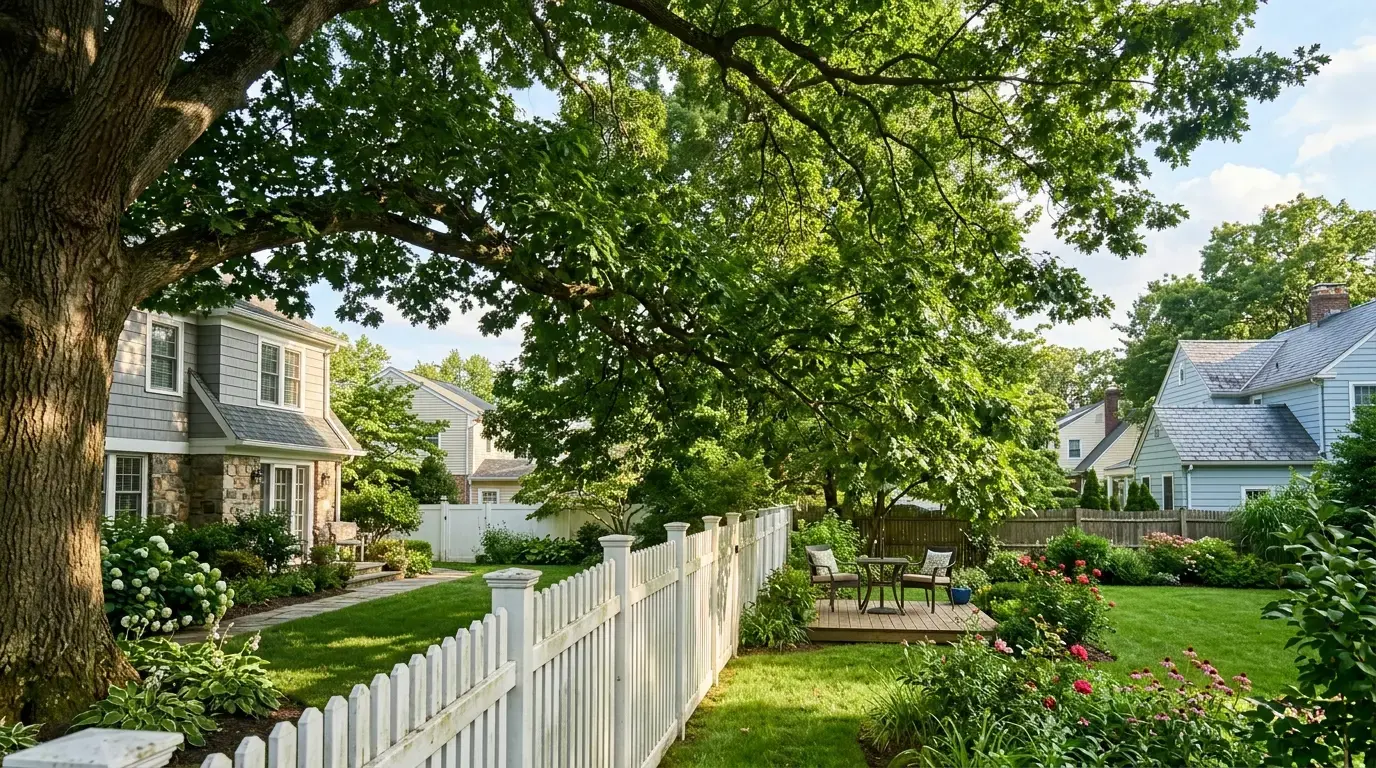
Ownership follows the trunk, not the branches. Here’s what you can and can’t do with a neighbor’s overhanging tree.
Read More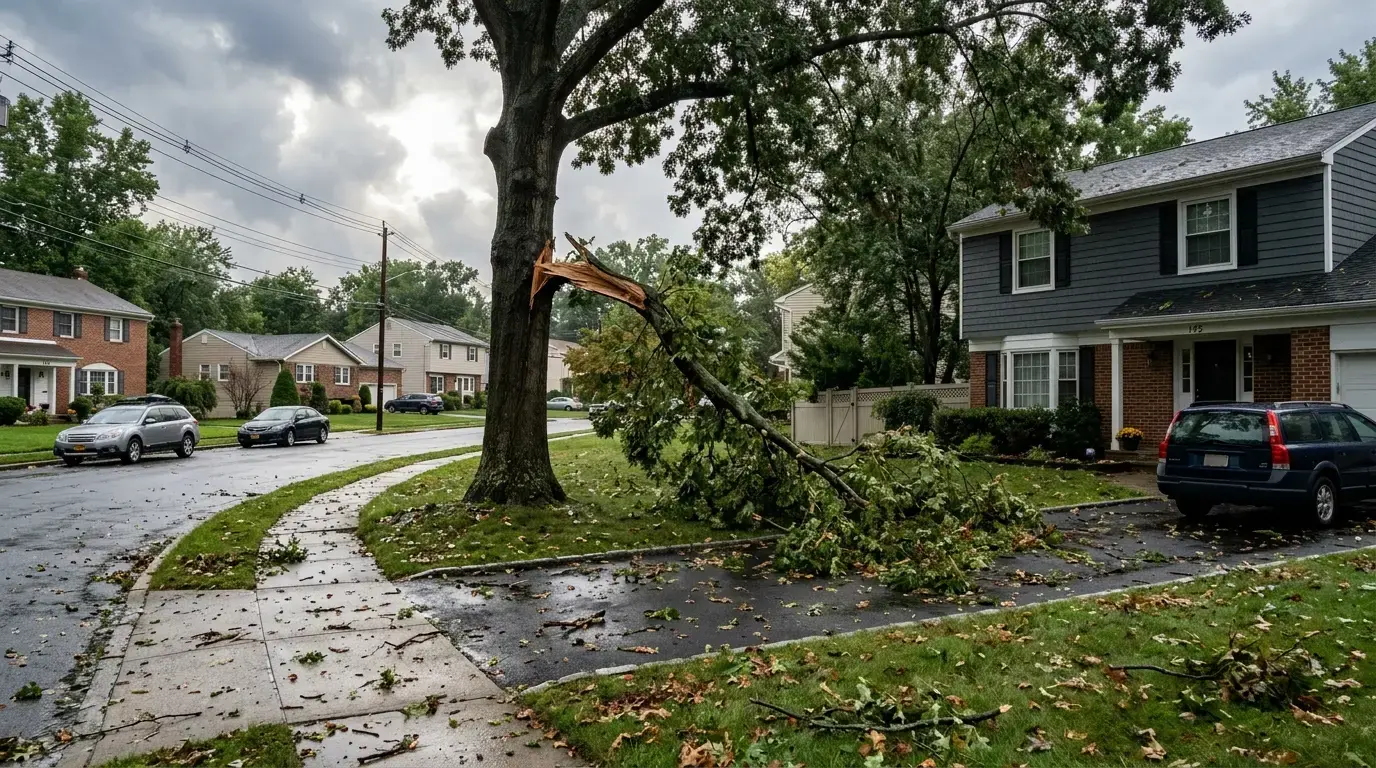 Emergency
The morning after a storm is when most people make bad decisions with a chainsaw. Here’s the order to work through it.
Read More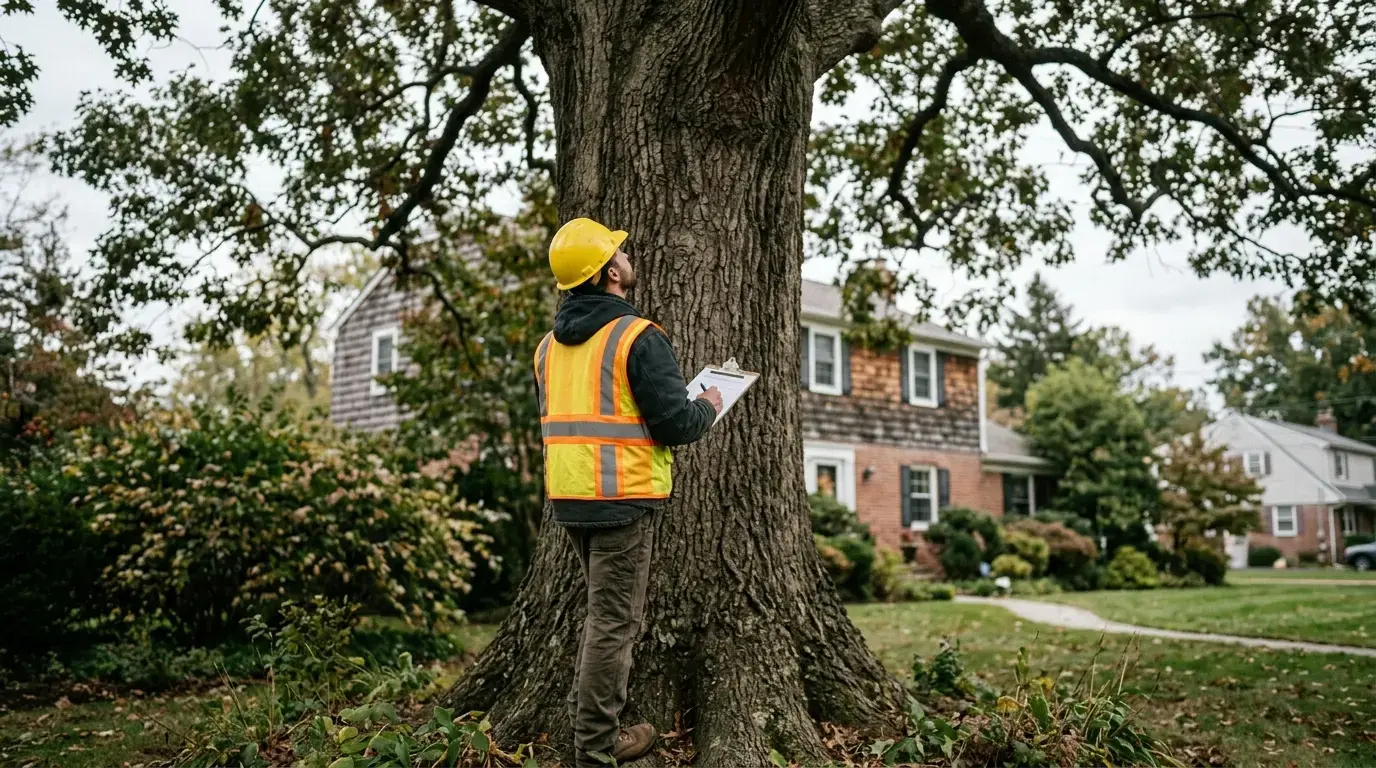 Decision Guide
Not every problem needs removal. Here’s the framework arborists use to decide, and how to read a quote critically.
Read MoreCheck with your town first, then send us the details. The on-site estimate is free and the price arrives in writing.