How Do You Know If a Tree Is Dying? Signs to Look For in NJ
A tree tells you it’s dying before it goes. Here’s what to check from canopy to roots in about ten minutes.
Read More
Somebody has told you the tree has to come down, and you’re not sure whether to believe them. Here’s the framework a good crew actually works from.
Somebody has told you the tree has to come down, and you’re not sure whether to believe them. That’s a reasonable place to be. Deciding between tree removal or pruning in New Jersey is genuinely difficult from the outside, because the two look similar from your kitchen window and cost very different amounts. It also carries an uncomfortable incentive problem. Removal is worth more to a tree company than pruning is, and not every company handles that honestly. A mature tree took forty years to get where it is and can’t be replaced in your lifetime, so the decision is worth slowing down for. The good news is that the criteria aren’t mysterious. Arborists work from a fairly consistent set of questions, and once you know what those questions are, you can hear an estimate and tell whether the reasoning holds together. Here’s the framework a good crew actually works from.
The single most useful question is where the problem sits. Problems in the canopy are usually fixable. Dead limbs, crossing branches, a heavy side, a limb over the roof, storm breakage: all of that is pruning work, and a tree with a healthy trunk and root system generally responds well.
Problems in the trunk or the root collar are a different matter. Active decay at the base, a vertical split running up the trunk, a hollow with thin remaining wall, fungal fruiting bodies at the root flare, or a root plate that has started to lift: these are structural, and pruning doesn’t address any of them. So the first thing to ask about any quote is which category the problem falls into. If the answer is vague, ask again more specifically. We cover the visible signs in how to know if a tree is dying.
“A mature tree took forty years to get where it is and can’t be replaced in your lifetime, so the decision is worth slowing down for.
Pruning solves more situations than most people expect. A tree crowding the house can often be reduced properly, cutting back to lateral branches so the canopy keeps a natural form at a smaller size. A tree that lost a limb in a storm usually recovers with clean cuts that let the wound seal.
A tree that’s too dense and catching too much wind gets thinned. A tree whose lower limbs block the driveway gets raised. In each of those cases the tree is structurally sound and the issue is shape, size or dead wood. Proper tree trimming and pruning is also cheaper, not just now but over time, because a maintained tree rarely produces the sort of failure that turns into an emergency removal plus a repair bill.
Some situations don’t have a pruning solution. A dead tree is a dead tree. A tree that has lost substantially more than half its living canopy is usually past recovery. A split trunk generally can’t be made sound again. Extensive decay in the root collar means the anchoring is compromised regardless of how good the canopy looks.
And sometimes a perfectly healthy tree is simply in the wrong place, growing into a foundation, a septic field or a structure, where the conflict only gets worse with time. In New Jersey, ash killed by emerald ash borer belongs in this category too, and there’s a timing element: dead ash turns brittle quickly, and waiting makes the tree removal harder and more expensive.
The choice isn’t always binary, and the options in between are the ones that get skipped in a quick quote. Cabling and bracing support a splitting union so a structural weak point doesn’t become a removal, and on a mature specimen that can buy fifteen or twenty years. Crown reduction takes real size off a tree that has outgrown its space, without the damage that topping causes.
Staged work spreads heavy pruning over two seasons so the tree isn’t stressed all at once. And monitoring is a legitimate answer: some trees should be looked at annually rather than acted on today. If nobody has mentioned any of these, it’s fair to ask why not.
How to read a quote critically and decide between pruning and removal for a tree in New Jersey.
Ask where the problem is. Canopy problems are usually prunable and structural problems usually aren’t. If the explanation is vague or the answer is always removal regardless of the tree, get a second opinion.
Per visit, generally yes. Over the life of the tree it’s also usually cheaper, because maintained trees fail less often, and a failure costs the removal plus whatever it landed on.
Depends on why it leans. A tree that grew that way toward light is often fine. A tree that started leaning recently, especially with lifted soil at the base, is a different situation and rarely improves.
Cables and braces support a weak union on a tree that’s otherwise sound and worth keeping. It makes sense on mature specimens where the alternative is losing the whole tree to one structural flaw.
As a general rule, taking more than about a quarter of the living canopy in a season stresses the tree and triggers weak regrowth. Heavier work is better split across two visits.
Yes. It happens regularly, and the estimate is free either way. A tree that needs nothing is a perfectly acceptable outcome of an inspection.
More on tree work in New Jersey from the Alfa Tree Service blog.
 Diagnosis
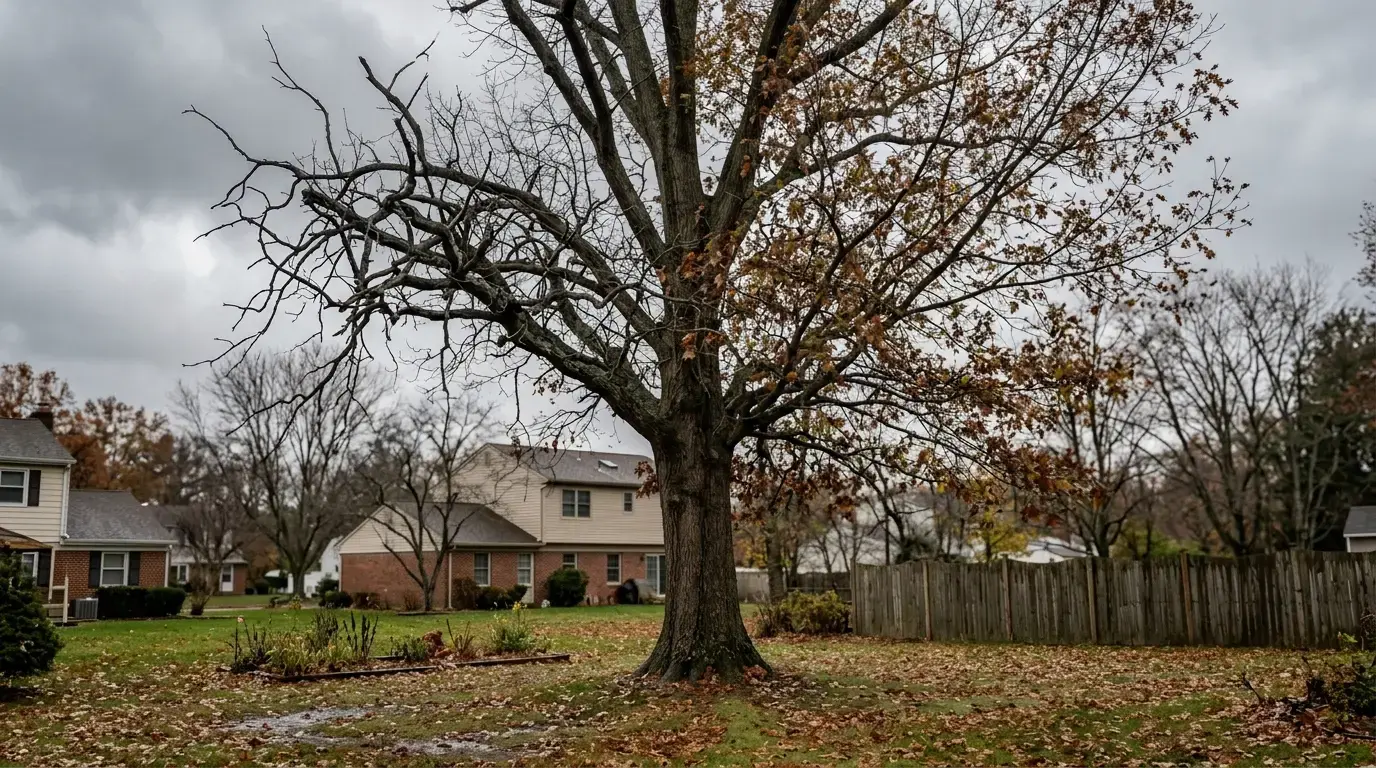
A tree tells you it’s dying before it goes. Here’s what to check from canopy to roots in about ten minutes.
Read More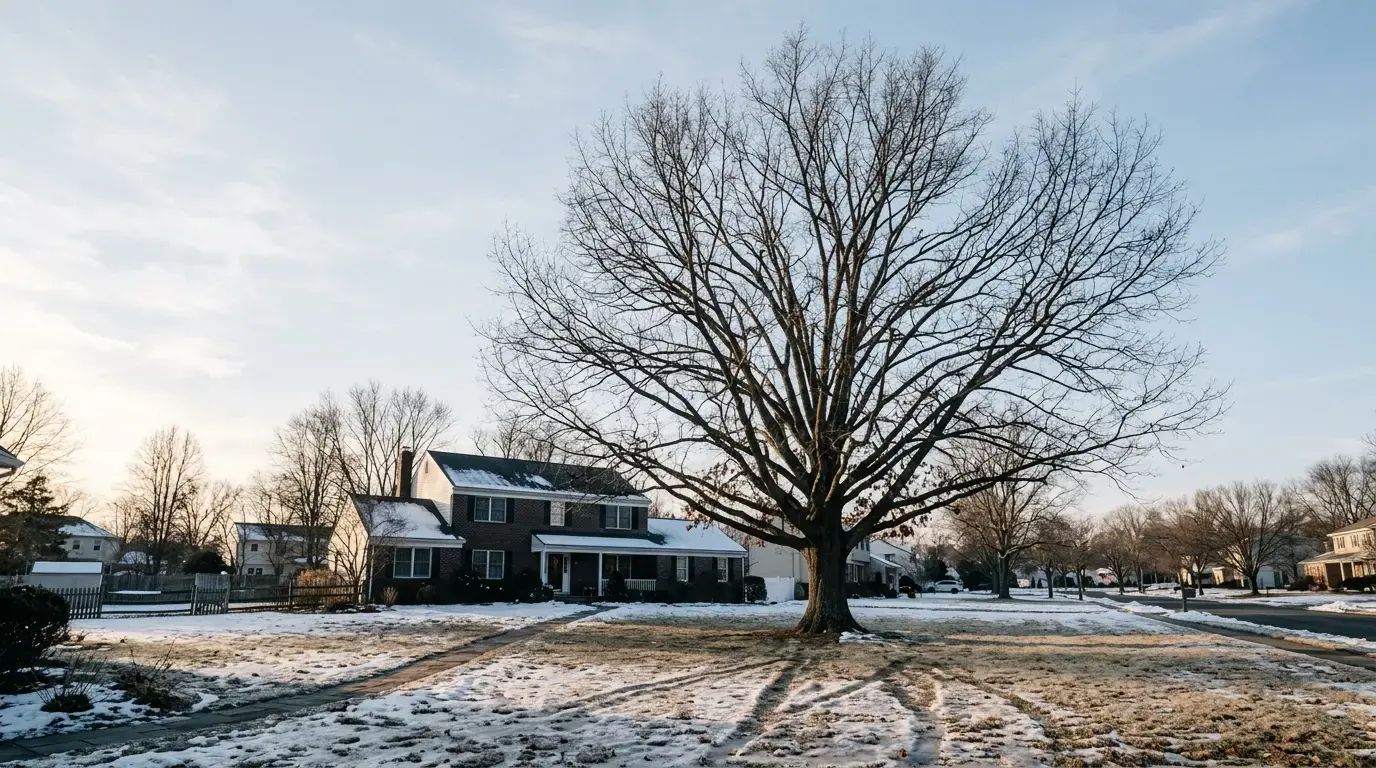 Seasonal
Timing changes the result of a pruning job. Here’s the best window for New Jersey trees, season by season.
Read More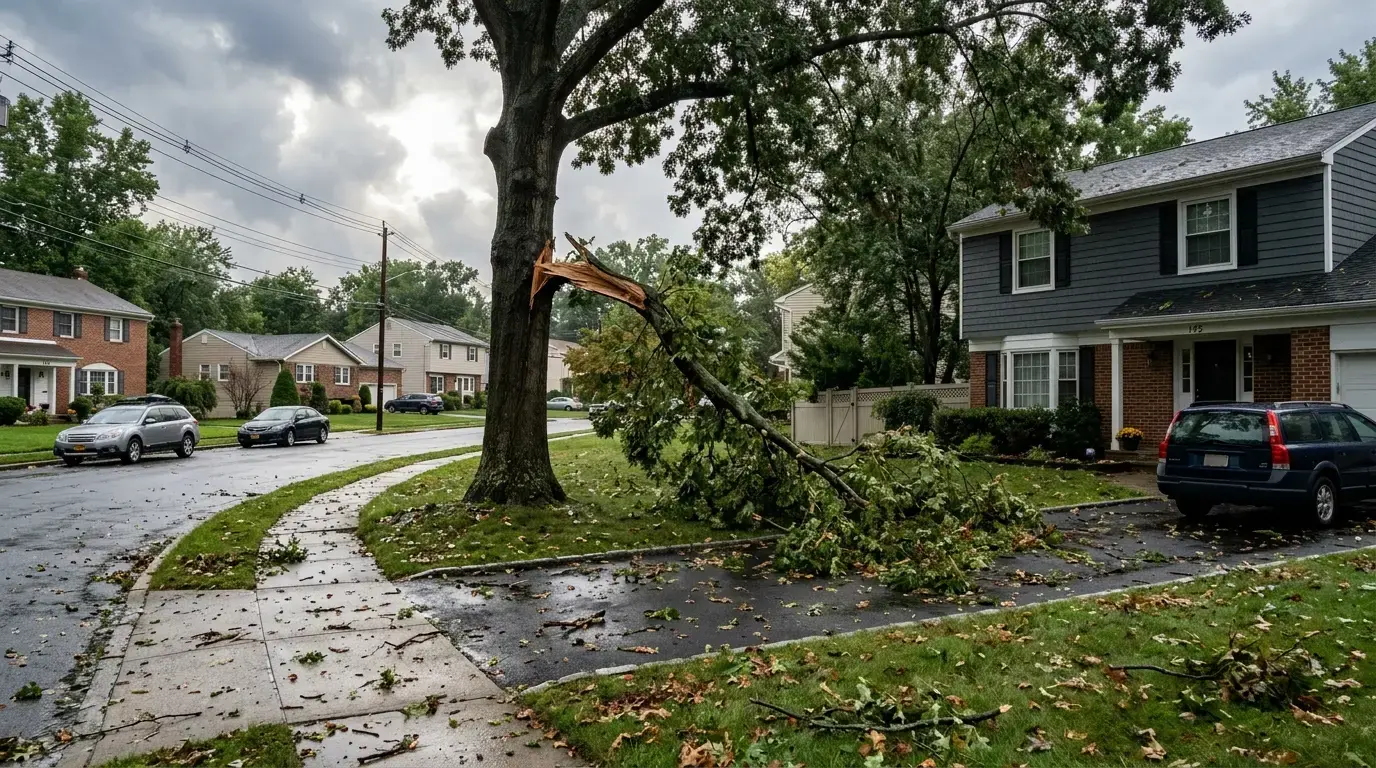 Emergency
The morning after a storm is when most people make bad decisions with a chainsaw. Here’s the order to work through it.
Read MoreNot sure whether the tree needs pruning or removal? The on-site look is free, and the answer comes with the reasoning.