How Do You Know If a Tree Is Dying? Signs to Look For in NJ
A tree tells you it’s dying before it goes. Here’s what to check from canopy to roots in about ten minutes.
Read More
The morning after a storm is a bad time to make decisions about trees, and it’s exactly when most people make them. Here’s the safer order to work through it.
The morning after a storm is a bad time to make decisions about trees, and it’s exactly when most people make them. A limb is down, the driveway is blocked, and the instinct is to get the chainsaw out and start cutting. That instinct is how people get hurt. A storm damaged tree in New Jersey isn’t the same object it was the day before. Wood that’s bent, split or hung up holds tension, and cutting into it releases that tension in a direction you didn’t plan for. Meanwhile the tree that looks fine may have moved at the roots, and the one leaning on the shed may be the least urgent thing in the yard. This is the order to work through it in. Some of it’s about safety, some is about not spending money on work that doesn’t need doing, and one part of it is about knowing when to stop and let someone else handle it.
If any part of the tree is touching a wire, or if a wire is down anywhere near it, that’s where this stops. Don’t approach it, don’t move branches off it, and don’t let anyone else. Call the utility company, and call 911 if there’s any immediate danger to people. Downed conductors can energize fences, wet ground and standing water well away from where they landed.
This isn’t a case where careful counts, because you can’t tell a live line from a dead one by looking. No reputable tree company will touch a tree in contact with an energized line either. The utility clears it first, and the tree work happens afterward. Losing an afternoon to that sequence is the correct outcome.
The obvious damage is the limb on the lawn. The damage that matters is often the tree still standing. Walk around each tree near the house and look at the base. Soil that’s cracked, lifted or mounded on one side means the root plate shifted during the storm, and a tree in that condition can go over in the next moderate wind.
Look up as well, for limbs that broke but didn’t fall. A hanger caught in the canopy comes down on its own schedule, usually onto whatever is underneath. Also check for fresh splits where a major limb meets the trunk. In New Jersey wet snow and coastal wind both tend to fail trees at those unions rather than snapping them clean.
“A storm damaged tree isn’t the same object it was the day before. Wood that’s bent, split or hung up holds tension, and cutting into it releases that tension in a direction you didn’t plan for.
Not every storm damaged tree needs to come down. A tree that lost a limb or two, even a large one, often recovers fine with proper cleanup cuts that let the wounds seal. What determines the outcome is how much of the living canopy is gone and whether the trunk is intact.
Roughly speaking, a tree that lost more than about half its crown is in serious trouble, and a split trunk usually isn’t recoverable at all. Everything in between is a judgment call that depends on species, age and where the tree stands. A tree in the middle of the yard gets more benefit of the doubt than the same tree leaning over a bedroom.
Ground level brush and small limbs are reasonable to handle yourself. Everything else is worth thinking twice about. Anything hung up in a canopy, anything under tension, anything requiring a ladder, and anything near a structure belongs to a crew with rigging. Chainsaw injuries spike after storms for exactly this reason.
Alfa Tree Service handles storm cleanup and tree services in New Jersey Monday through Saturday, which is worth knowing when you’re planning the week. If something is unsafe overnight, the utility and local emergency services are the right first call, and the cleanup and tree removal work follows once the site is safe. If you saw damage that already looks like a tree in trouble beyond the storm, that’s covered in signs a tree is dying.
What homeowners ask most after a storm knocks down limbs or shifts a tree in New Jersey.
Brush and small limbs on the ground, usually yes. Anything hung up in a canopy or under tension is a different job. A trunk on the ground still holds load, and cutting it wrong releases that suddenly.
Often yes, if the trunk is intact and most of the canopy is still there. What helps is a clean cut back to the branch collar so the wound can seal, rather than leaving a torn stub.
If the soil at the base is lifted or cracked, treat it as urgent. A shifted root plate doesn’t settle back, and the next wind usually finishes what the storm started.
Alfa Tree Service works Monday through Saturday and doesn’t run a 24 hour emergency line. For anything unsafe overnight, the utility company and emergency services are the right first call.
It’s a reasonable habit before anything gets cut or moved. Photos of the damage and of the surrounding area are easy to take and impossible to recreate afterward.
Hangers and split limbs should come down sooner rather than later, because they fall on their own schedule. Ground debris can wait a few days without making anything worse.
More on tree work in New Jersey from the Alfa Tree Service blog.
 Diagnosis
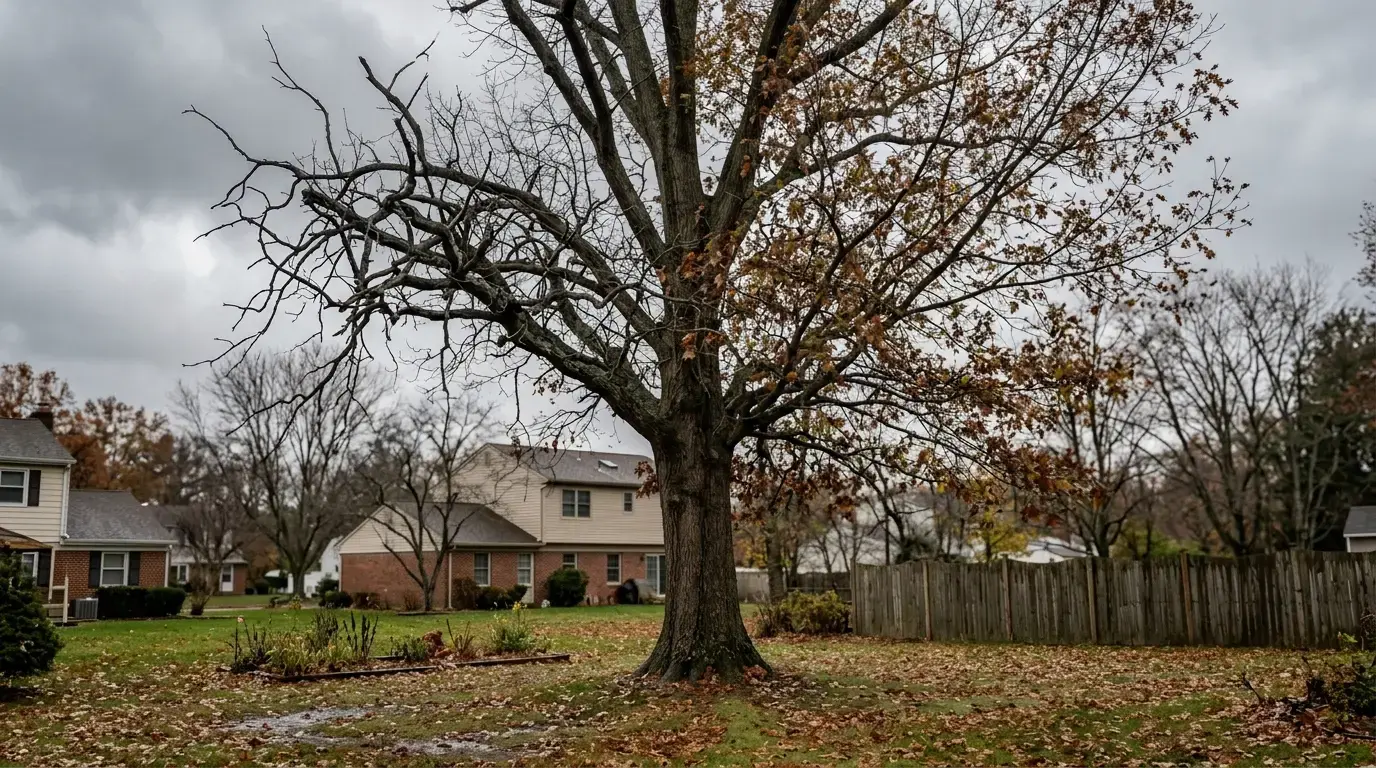
A tree tells you it’s dying before it goes. Here’s what to check from canopy to roots in about ten minutes.
Read More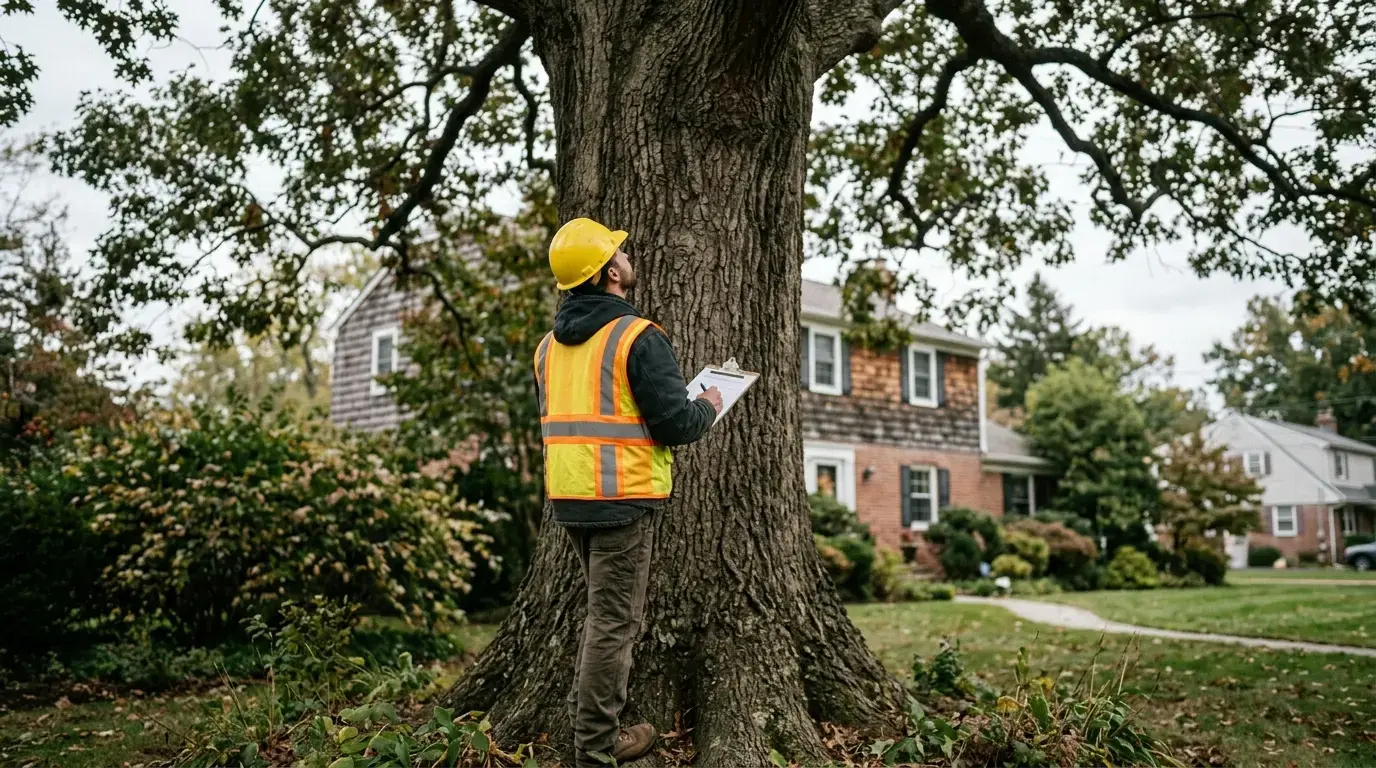 Decision Guide
Not every problem needs removal. Here’s the framework arborists use to decide, and how to read a quote critically.
Read More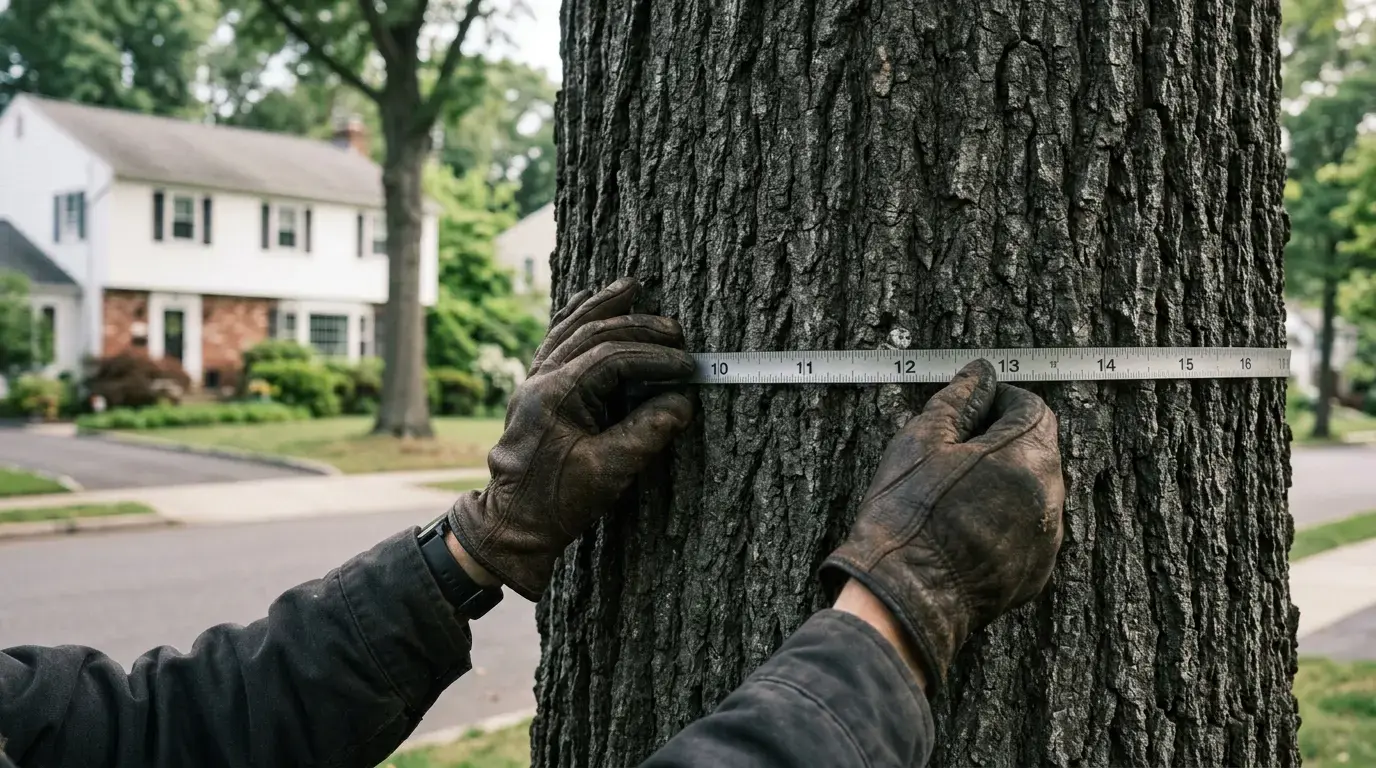 Permits
Rules change town by town in New Jersey. Here’s what typically triggers a permit and how to check for your address.
Read MoreSend photos of the damage and we’ll tell you what needs doing now, what can wait, and what the whole job costs.