Do You Need a Permit to Remove a Tree in New Jersey?
Rules change town by town in New Jersey. Here’s what typically triggers a permit and how to check for your address.
Read More
This question causes more neighbor disputes than almost anything else in a yard. Here’s how the general rules actually work.
This question causes more neighbor disputes than almost anything else in a yard, and most of the disagreement comes from people applying rules that sound reasonable but aren’t how it works. Property line trees in New Jersey follow a fairly consistent set of general principles, and understanding them ahead of time usually prevents the argument entirely. Before going further: this is background, not legal advice. Alfa Tree Service is a tree company, not a law firm, and anything genuinely contested belongs with an attorney who can look at your deed and your survey. What we can tell you is how these situations tend to be handled, what tree crews are and aren’t able to do at a property line, and how to approach a neighbor about a tree without turning a pruning job into a five year grudge. Most of these situations resolve quietly when both sides know where they actually stand.
The general principle is that a tree belongs to whoever owns the ground the trunk stands in. If the trunk is entirely on your neighbor’s side, it’s their tree, even if two thirds of the canopy hangs over your yard and every leaf lands on your lawn. Branches crossing the line don’t transfer ownership, and neither does the fact that you’re the one raking.
Where the trunk straddles the line, the situation changes. A tree growing on the boundary itself is generally treated as jointly owned, which means neither party can simply remove it without the other agreeing. That’s the case that most often ends up needing an attorney, and it’s also the case where a survey matters, because people are frequently wrong about exactly where the line runs.
“Ownership follows the trunk, not the branches. If the trunk is entirely on your neighbor’s side, it’s their tree, even if every leaf lands on your lawn.
The general rule is that you may trim branches that cross onto your property, cutting them back to the property line, at your own expense. What you may not do is cross the line to do it, and you may not cut in a way that damages or kills the tree. That second limit is the one people run into.
Taking a third of a canopy off one side because it happens to be your side can constitute damage to the tree, and that can create liability. The same goes for roots. Cutting major roots on your side can destabilise a tree, and if it fails afterward the question of who caused it gets expensive. A tree crew doing pruning at a property line does the work from your side, cuts to the line, and stops there.
A healthy tree dropping leaves is a nuisance. A dead tree leaning over your roof is a different category, and it tends to be treated differently. Generally speaking, an owner who knows a tree is hazardous and does nothing carries more responsibility for what happens than one who had no reason to know.
That’s why documentation matters. If a neighbor’s tree is visibly dead or failing and it threatens your property, a written notice to them creates a record that they were informed. Keep a copy, keep it polite, and keep it factual. An arborist inspection that puts the condition in writing is also useful, and it’s often what moves a stalled conversation forward without anyone involving lawyers. If you need help spotting the signs, we cover that in how to know a tree is dying.
Almost every property line tree situation goes better as a conversation than as a letter. Most neighbors don’t know the tree is a problem, haven’t looked at it closely, and aren’t opposed to dealing with it once they understand. Lead with the specific issue rather than the general grievance. A dead limb over the driveway is a concrete thing to discuss.
Splitting the cost is common and usually cheaper for both sides than either party doing it alone, since the crew is already set up. If the tree needs to come down and it sits on the line, both owners generally need to agree, so the conversation isn’t optional anyway. Starting with it saves everyone a year of tension. And if the town regulates the tree, that’s covered separately in tree removal permits in New Jersey, and any removal work should happen after the ownership question is settled.
The most common questions we get from homeowners dealing with a neighbor’s tree at the line.
Generally you can trim back to the property line at your own cost, without crossing onto their land and without damaging the tree. Cutting so much that the tree is harmed is where it turns into a problem.
It depends heavily on the circumstances, particularly whether the tree was visibly hazardous beforehand and whether the owner had been told. That’s a question for an attorney, not a tree company.
That’s generally treated as jointly owned, meaning both owners need to agree before it’s removed. This is the situation where a current survey matters most, because assumptions about the line are frequently wrong.
Not directly in most cases, unless it’s hazardous and there’s a municipal process that applies. What you can usually do is trim what crosses onto your side, at your own expense.
For a healthy tree, a conversation is better. For a visibly dead or failing tree threatening your property, a polite written notice creates a record that the owner was informed, which can matter later.
Yes, from your side of the line and within the limits above. What we can’t do is settle who owns it. If the ownership is contested, that needs sorting before the crew shows up.
More on tree work in New Jersey from the Alfa Tree Service blog.
 Permits
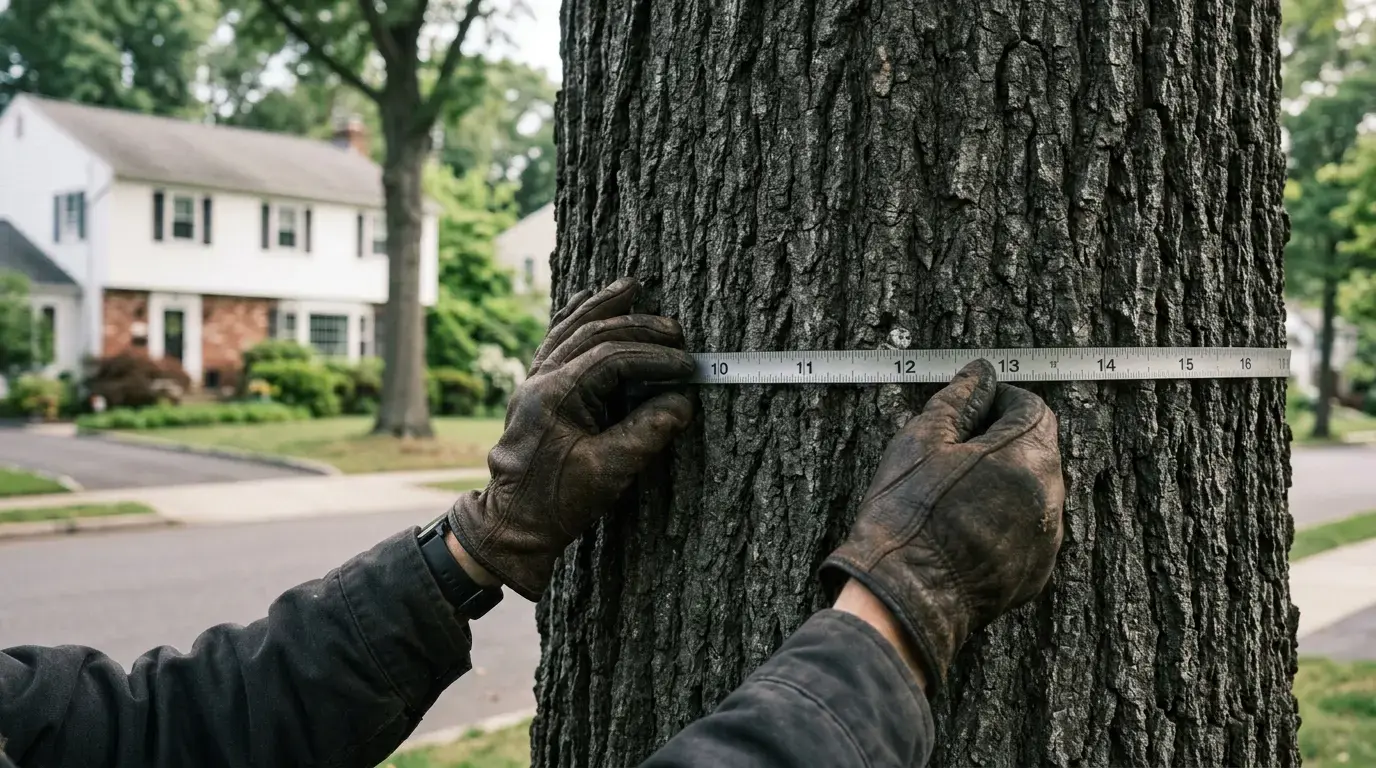
Rules change town by town in New Jersey. Here’s what typically triggers a permit and how to check for your address.
Read More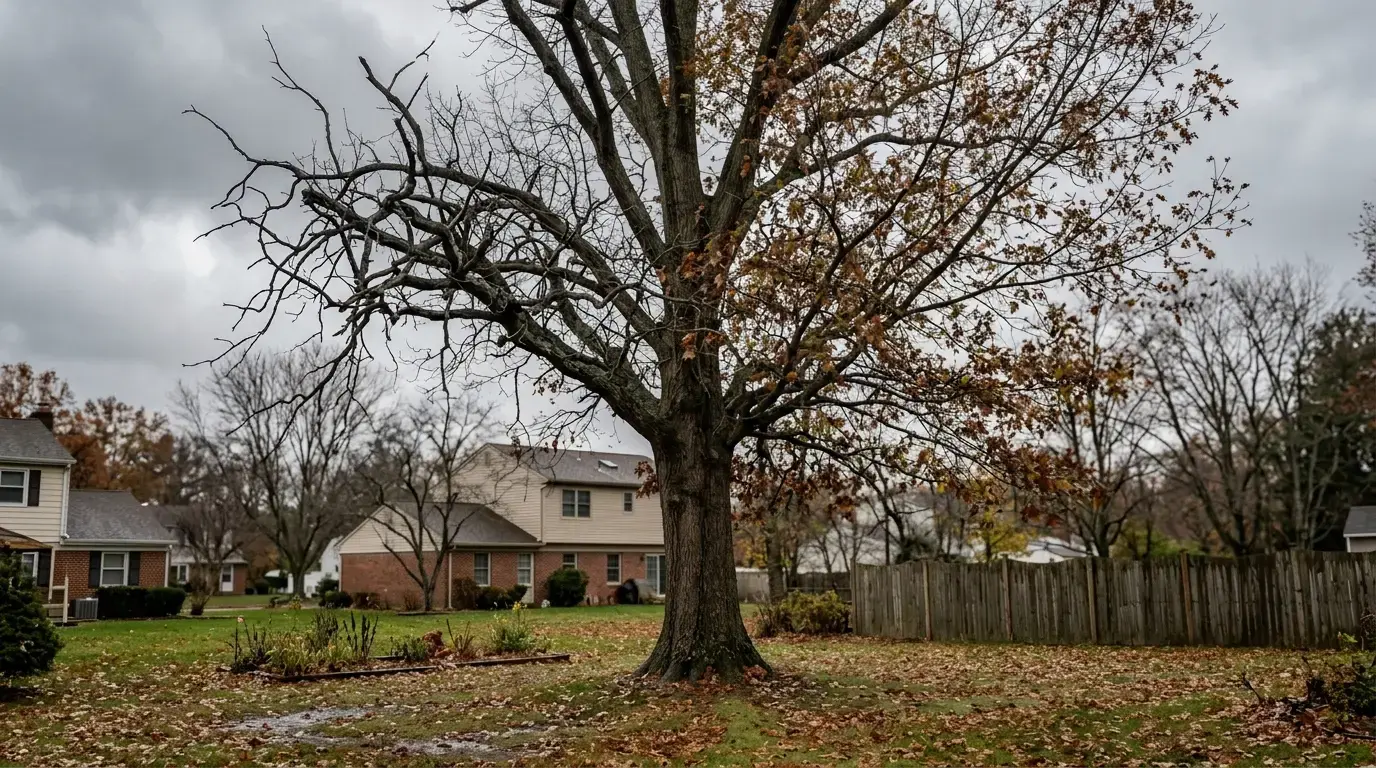 Diagnosis
A tree tells you it’s dying before it goes. Here’s what to check from canopy to roots in about ten minutes.
Read More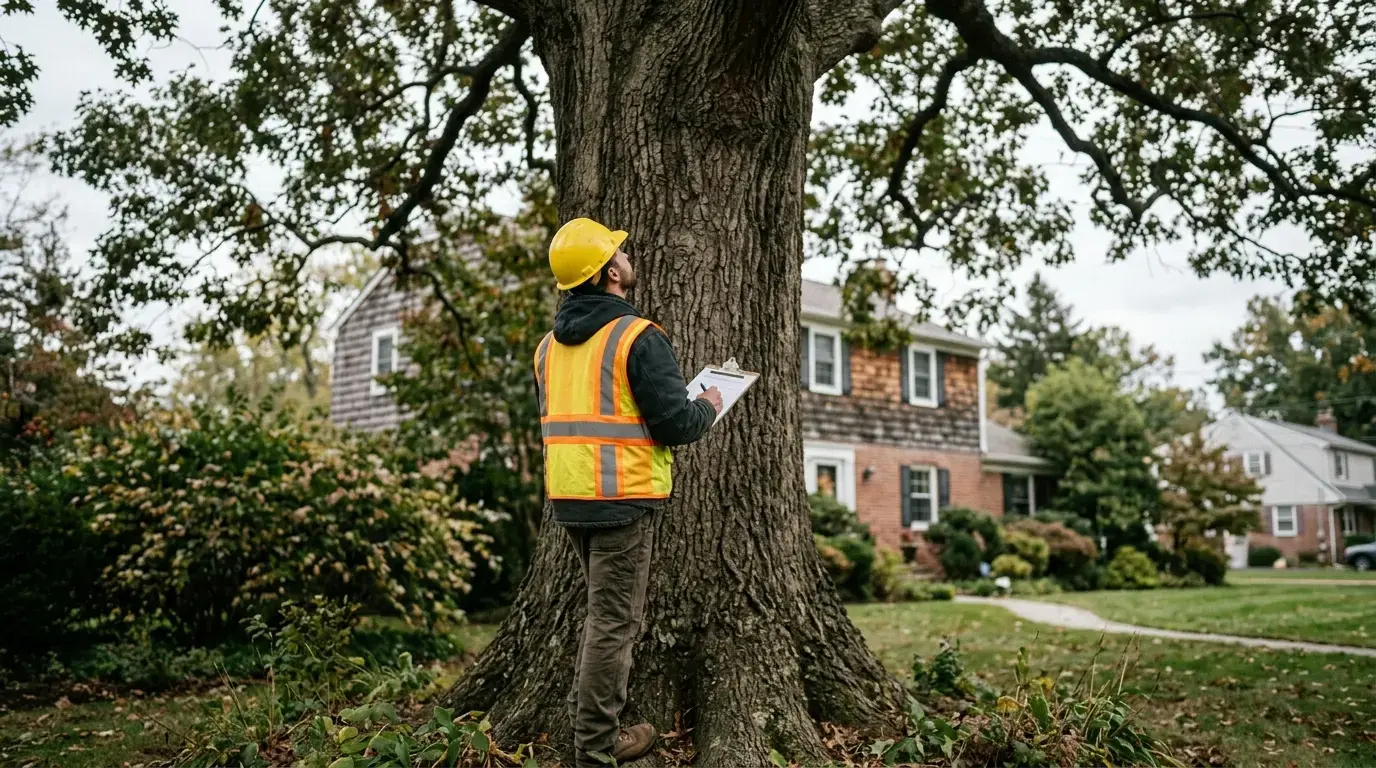 Decision Guide
Not every problem needs removal. Here’s the framework arborists use to decide, and how to read a quote critically.
Read MoreSend us the details and we’ll tell you what can be done from your side of the line, and what it costs.