What to Do When a Storm Damages a Tree in New Jersey
The morning after a storm is when most people make bad decisions with a chainsaw. Here’s the order to work through it.
Read More
A tree doesn’t die all at once. It usually spends a few seasons telling you what’s coming, and most people miss the signs because they’re looking at the wrong part of the tree.
A tree doesn’t die all at once. It usually spends a few seasons telling you what’s coming, and most people miss the signs because they’re looking at the wrong part of the tree. If you’re trying to work out whether a tree is dying in New Jersey, the answer is almost always visible somewhere between the canopy and the roots. You just have to know where to look. This matters more here than in a lot of places. New Jersey trees deal with heavy wet snow, coastal storm systems, ice loading in the western counties, and emerald ash borer working its way through the ash population. A tree that’s already stressed doesn’t handle any of that well, and a dead tree standing next to a house is a very different problem than a dead tree in the woods. Here’s what to check, in the order a crew would check it during an inspection. None of it requires climbing anything, and most of it you can do from the ground in about ten minutes.
The canopy tells you the most and it’s the easiest thing to read. In summer a healthy tree should be leafed out evenly. If one section is bare while the rest is full, that section is already dead, and the tree is showing you exactly where the problem started.
Thin canopy over the whole tree is a different signal. That’s usually stress rather than death: drought, root damage, construction nearby, or soil compaction from something parked over the root zone for a season. Stressed trees often recover with pruning and time. The one worth worrying about is a tree that leafs out late and drops early, two years running. That’s a tree running out of stored energy, and it rarely turns itself around.
Bark falling off in sheets means the tissue underneath has already died. Healthy bark is tight to the trunk. If you can pull a piece off by hand and there’s dry wood behind it, that section is gone.
Vertical cracks are more serious than they look. A seam running up the trunk means the tree is already splitting under its own weight, and cracks like that don’t close. Cavities are similar. A hollow trunk can stand for years, but the wall thickness is what holds it up and you can’t judge that from outside. Woodpecker activity is a useful signal too. They’re after insects, and insects are after wood that’s already decaying, so heavy woodpecker damage usually means the tree is further along than it looks.
This is the part most people skip, and it’s where the dangerous problems live. Mushrooms or shelf fungus growing at the base of a trunk mean decay is active in the root collar. The tree may still have a full canopy, and plenty of them do, and still be one storm away from going over.
Root heave is the other one. If the soil on one side of the trunk is lifted, cracked or mounded, the root plate is starting to pull free of the ground. That’s not a slow problem. A tree with a lifting root plate in saturated New Jersey soil can go over in a single windy night. Soft, spongy ground around the base is worth checking too, especially on properties near water.
“The cheapest version of the job is the one you do before it fails. After it fails you’re paying for the removal plus whatever it landed on.
A dead tree in the middle of a woodlot can stand and fall on its own schedule. A dead tree within reach of a house, a driveway, a power line or a play area is a completely different conversation. What changes is time. Dead wood dries out and turns brittle, and a brittle tree is far harder to take down safely than a live one.
Dead ash in particular goes from climbable to unclimbable quickly, which is why so many ash tree removals in New Jersey end up needing a crane. If the tree is dying and it stands near something you care about, the cheapest version of the job is the one you do before it fails. After it fails you’re paying for the removal plus whatever it landed on. Full-service tree services cover the assessment, the removal and the cleanup in one visit.
Answers to the questions we get most from homeowners inspecting a tree that looks off.
Sometimes, depending on what’s wrong. Stress from drought, compaction or storm damage often responds to pruning and time. Active decay in the root collar generally doesn’t. An inspection is what tells you which one you have.
Longer than you’d like, and it gets more dangerous the whole time. Dead wood dries out and turns brittle, which makes the removal harder and more expensive the longer you wait.
No. Plenty of hollow trees stand safely for decades. What matters is the thickness of the remaining wall and where the cavity sits. That’s not something you can judge from the outside.
Emerald ash borer, an invasive beetle that has moved through the ash population in much of the state. Infested ash dies quickly and becomes brittle fast, which changes how the removal has to be done.
It’s the most useful time to do it. Wet snow and ice load a canopy hard, and deadwood and weak unions are what fail first. Catching those in fall means less damage in February.
No. The on-site estimate is free, and if the answer is that the tree is fine and needs nothing, that’s what you get told.
More on tree work in New Jersey, from storm cleanup to timing your pruning right.
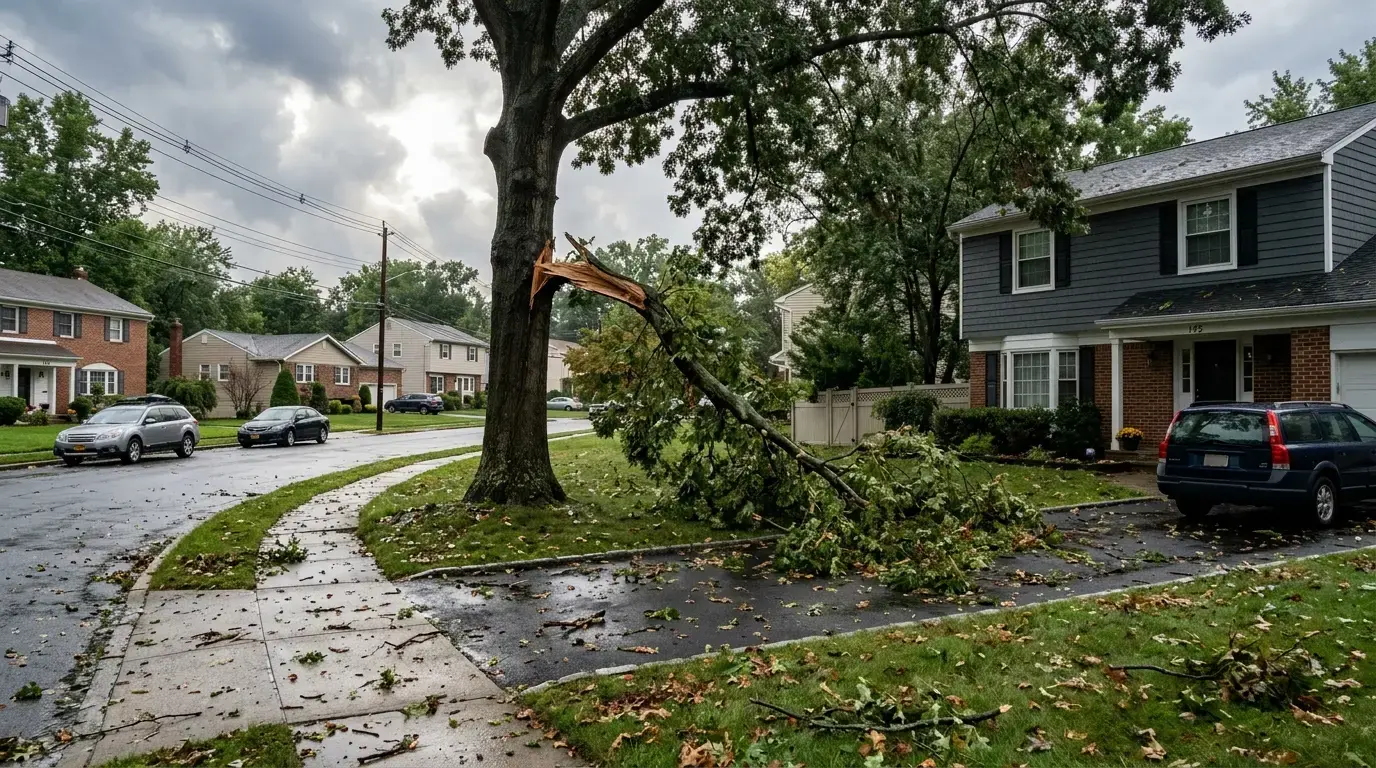 Emergency
The morning after a storm is when most people make bad decisions with a chainsaw. Here’s the order to work through it.
Read More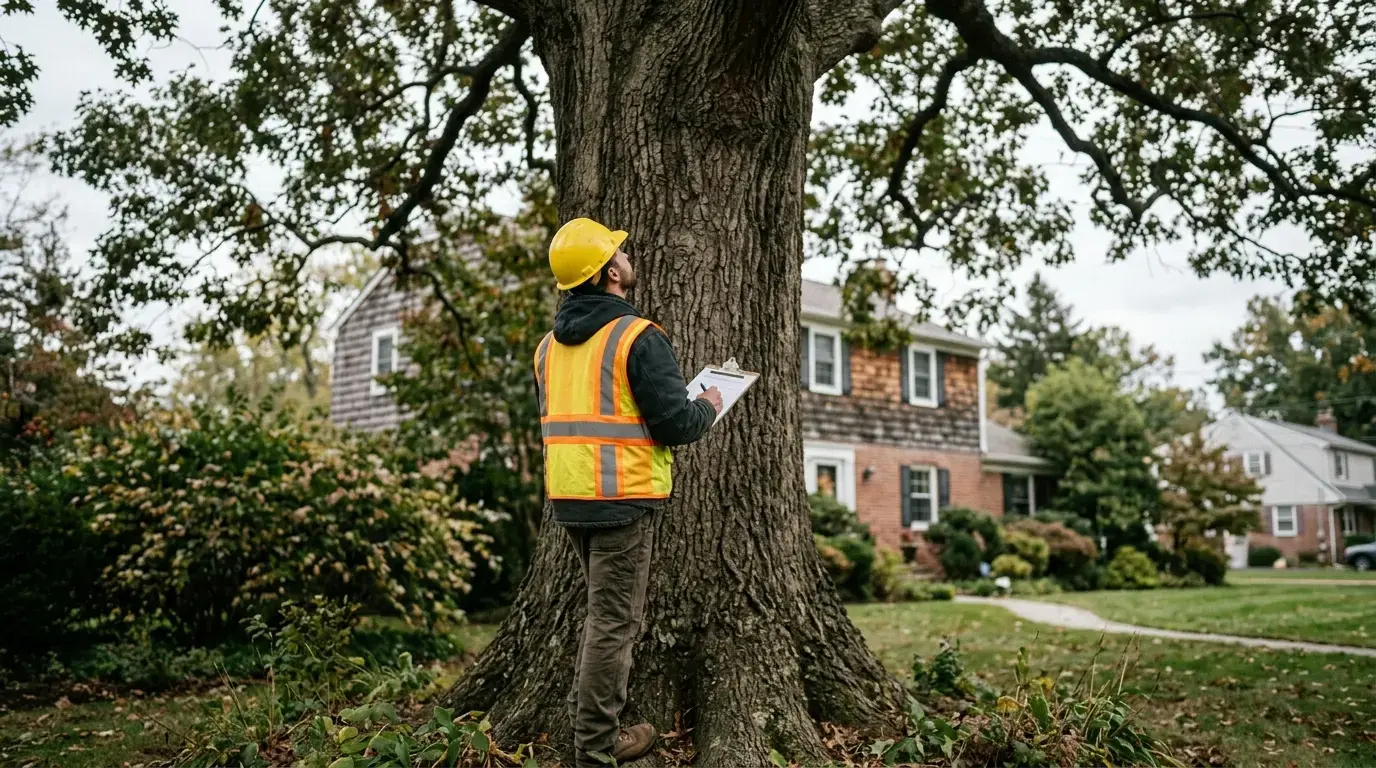 Decision Guide
Not every problem needs removal. Here’s the framework arborists use to decide, and how to read a quote critically.
Read More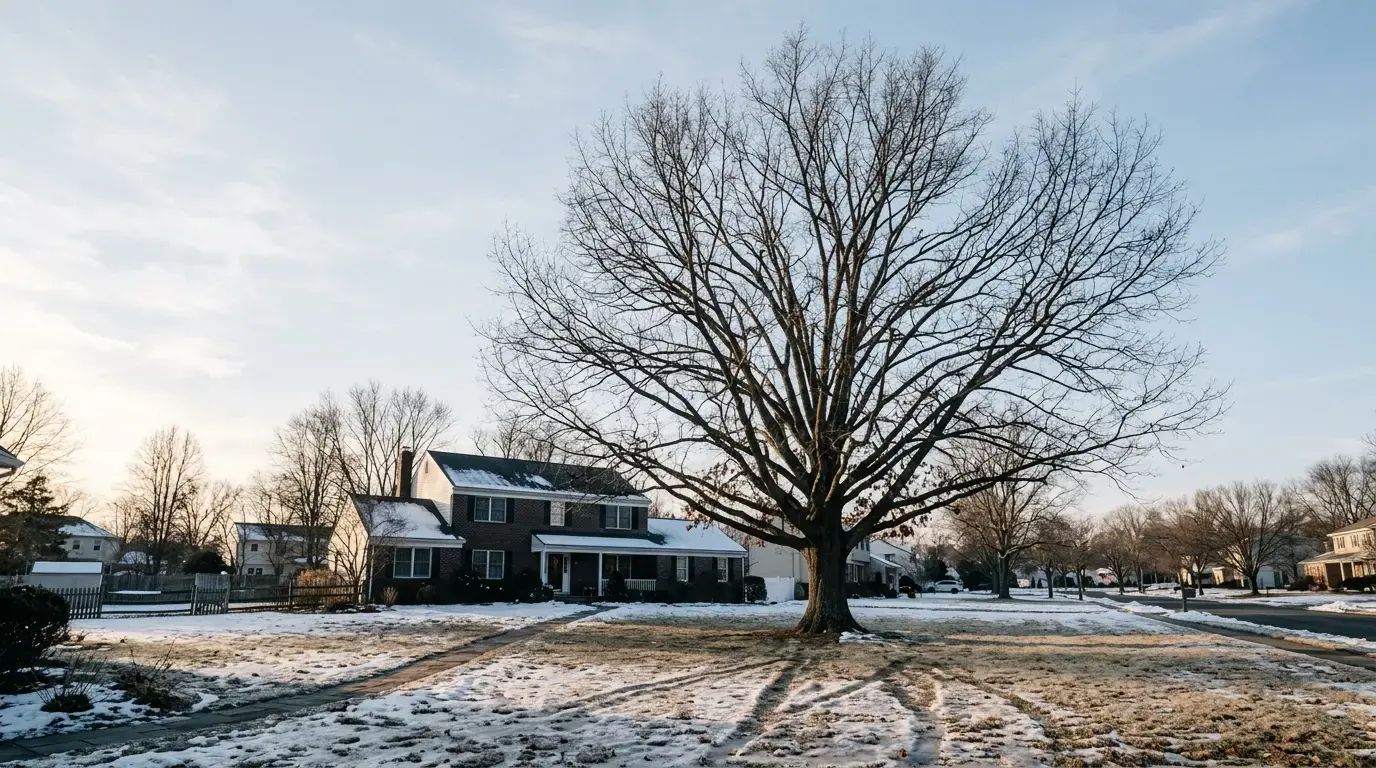 Seasonal
Timing changes the result of a pruning job. Here’s the best window for New Jersey trees, season by season.
Read MoreIf a tree on your property is showing any of these signs, an on-site look costs nothing and settles the question in about fifteen minutes.